In the ever-evolving world of software development and IT project management, methodology plays a crucial role in determining success. Two of the most widely discussed approaches are Agile and Waterfall. While Waterfall has been around for decades as a structured, linear model, Agile has emerged as a flexible, iterative alternative. The debate continues: which methodology is more effective for modern IT projects?
Understanding the Two Methodologies
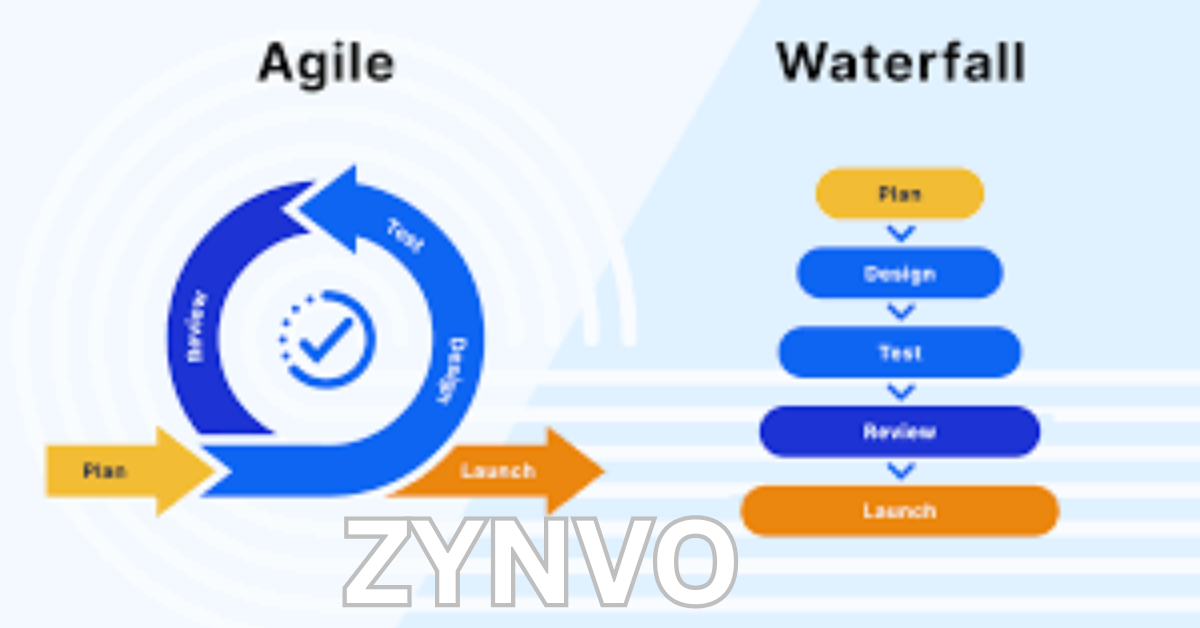
Waterfall Model
-
A sequential development process where each phase (requirements, design, implementation, testing, deployment, maintenance) must be completed before the next begins.
-
Originated in the 1970s and widely used in large-scale, well-defined projects.
-
Strengths:
-
Clear documentation and structure
-
Predictable timelines and budgets
-
Easy to manage for projects with fixed requirements
-
-
Weaknesses:
-
Inflexibility to adapt to changes
-
Risk of late discovery of issues
-
Delays in user feedback until final stages
-
Agile Methodology
-
An iterative and incremental approach where projects are divided into sprints or short cycles.
-
Originated from the Agile Manifesto (2001), emphasizing collaboration, customer feedback, and adaptability.
-
Strengths:
-
Flexibility to accommodate changing requirements
-
Continuous delivery and early feedback
-
Strong focus on collaboration and teamwork
-
-
Weaknesses:
-
Less predictability in budgets and deadlines
-
Requires high client involvement
-
May face challenges in large, complex projects without proper governance
-
Graph: Agile vs. Waterfall Popularity (2015–2025)
(Illustrates the steady rise of Agile and decline of Waterfall in global IT projects.)
Key Differences Between Agile and Waterfall
| Feature | Agile | Waterfall |
|---|---|---|
| Approach | Iterative, incremental | Linear, sequential |
| Flexibility | Highly adaptive to change | Very rigid, limited flexibility |
| Client Involvement | Continuous throughout the project | Mainly at the start and end |
| Delivery | Frequent releases (sprints) | Single final release |
| Documentation | Lightweight, ongoing | Heavy, upfront |
| Risk Management | Issues identified early | Issues found late in process |
| Best Use Case | Dynamic, evolving requirements | Stable, well-defined requirements |
Which Methodology Works in Modern IT?
When Agile is Better
-
Projects with changing or unclear requirements.
-
Startups and innovative businesses needing fast delivery.
-
Teams that work closely with clients for continuous feedback.
-
Cloud-based, mobile, and web app development.
When Waterfall Still Works
-
Projects with fixed scope and strict regulations (e.g., government contracts, healthcare, aerospace).
-
Environments where documentation and compliance are mandatory.
-
Teams that are geographically distributed with less day-to-day interaction.
Hybrid Approaches: The Best of Both Worlds
Many organizations adopt a hybrid approach, blending Agile’s flexibility with Waterfall’s structure.
-
Agile-Waterfall Hybrid (AgileFall): Waterfall planning with Agile execution.
-
Scaled Agile Framework (SAFe): Helps enterprises implement Agile at scale while maintaining governance.
-
DevOps Integration: Combining Agile development with continuous integration, delivery, and operations.
Future Trends
-
Agile Dominance: By 2030, Agile is expected to become the default approach for most IT projects.
-
Waterfall for Specialized Fields: It will continue to be relevant in industries requiring strict compliance.
-
AI-Driven Project Management: Tools that automate sprint planning, bug tracking, and resource allocation.
-
Agile at Scale: Enterprises will adopt frameworks like SAFe and LeSS to manage global teams effectively.
Conclusion
In the battle of Agile vs. Waterfall, the answer isn’t about which is universally better—it’s about context. Agile dominates modern IT, especially in fast-paced, customer-centric industries, because of its adaptability and focus on continuous delivery. However, Waterfall still has a place in projects where predictability, compliance, and structure are non-negotiable.
The future lies in hybrid models, where organizations choose the right blend of methodologies to match their project goals. In modern IT, adaptability and context-driven decision-making are the real winners.